
Recliner & Furniture Mechanism Repair in Chicago
We repair broken or failing furniture mechanisms that affect how a recliner, sofa, or chair opens, closes, reclines, or supports weight. This service is designed for stuck footrests, broken handles, cable issues, uneven movement, and other mechanism problems when the furniture itself is still worth saving.
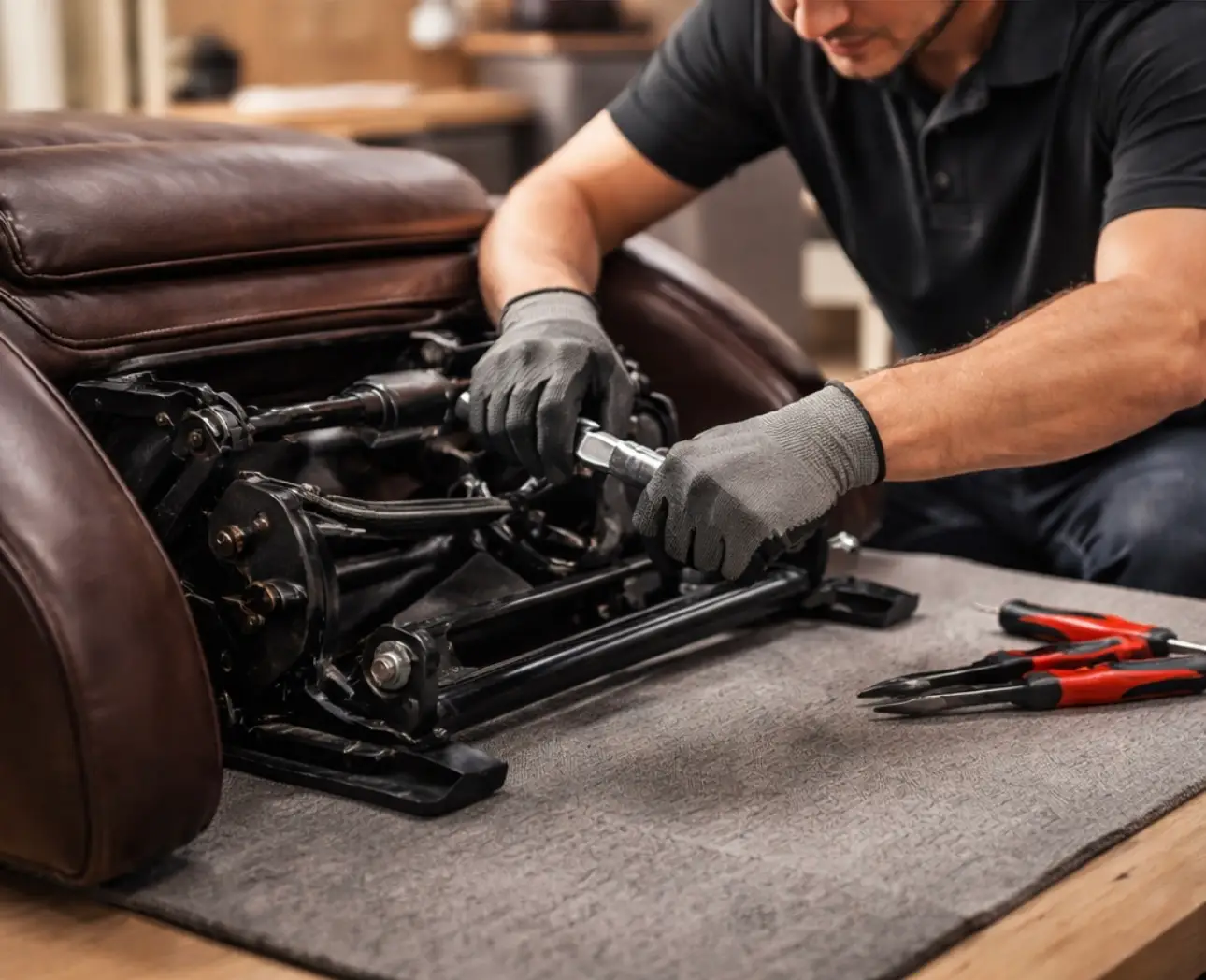
Signs Your Furniture May Need Mechanism Repair
Common Mechanism Problems We Handle
We work on furniture with functional mechanism problems that affect movement, balance, and everyday use. The right repair depends on the furniture type, how the mechanism is built, and which component is actually causing the failure.
Common Issues
- stuck or failing reclining motion
- footrests that do not open or close correctly
- broken or loose recliner handles
- cable and release-related mechanism issues
- tilted, uneven, or unstable operation
- movement that feels rough, inconsistent, or no longer reliable
Areas We Commonly Work On
- recliner chairs and reclining sofas
- manual reclining mechanisms
- selected power recliner systems
- footrest and extension components
- release handles and pull controls
- other furniture mechanisms that affect normal seating function
What the Mechanism Repair Process May Include
Depending on the piece, the process may include evaluating how the furniture operates, locating the failed component, accessing the internal moving parts, and correcting the issue that is causing the loss of function. The goal is to restore smoother, more stable, and more reliable operation where repair still makes sense.
When Mechanism Repair Helps
Mechanism repair is often the right choice when the furniture is still structurally worth keeping, but a specific functional part has failed. In many cases, that means the piece can return to normal use without pushing the project into full restoration or reupholstery.
When More May Be Needed
Some function problems are not caused by the mechanism alone. If the real issue involves broken frame parts, deeper structural failure, or other major wear, the furniture may need a different type of repair or a broader restoration approach.
Mechanism repair can solve many common recliner and furniture function problems, but it does not fix every issue automatically. If the real cause is deeper structural damage, severe internal wear, or a problem outside the mechanism itself, we will explain the limitations clearly and recommend the most realistic solution for the piece.
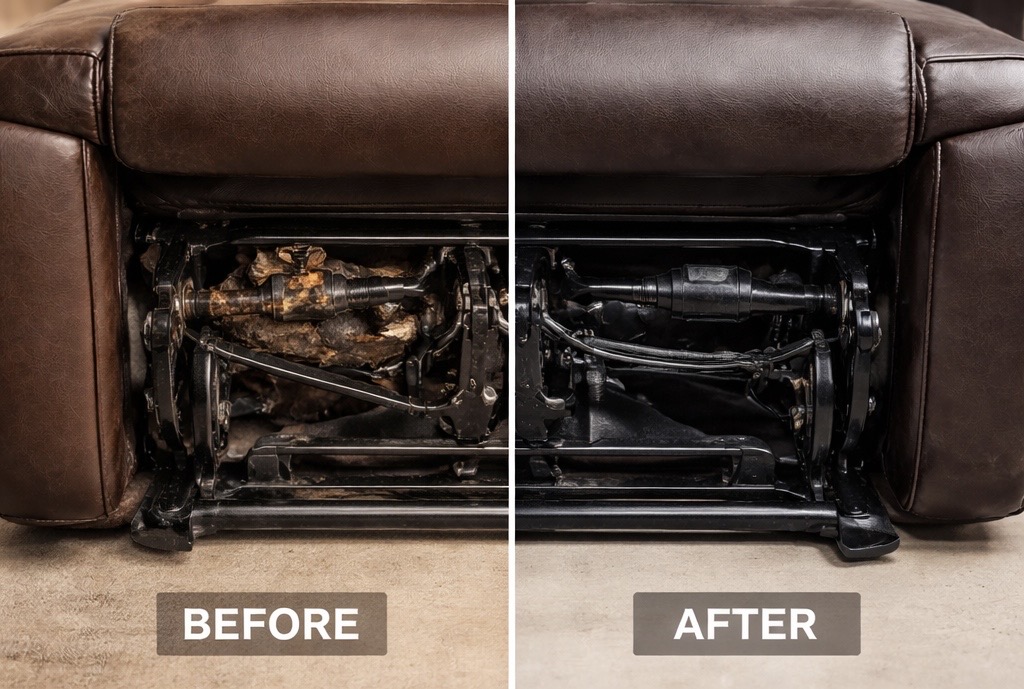
How Our Mechanism Repair Process Works
Each piece is evaluated based on how the mechanism is built, what symptom is showing up in normal use, and what level of repair is realistically possible. This helps us choose the right approach for the furniture instead of treating every mechanism problem the same way.
Function Evaluation
We begin by assessing how the furniture operates, where the movement is failing, and whether the issue appears to be in the handle, cable, footrest, reclining system, or another working component. This helps determine whether the piece is a good candidate for mechanism repair.
Repair Recommendation
Not every recliner or furniture mechanism problem needs the same type of work. We determine whether the issue points to a targeted mechanism repair, a specific component problem, or a larger structural issue that should be handled differently.
Access and Preparation
Before correcting the problem, we work with the furniture based on how the mechanism is designed and how the moving parts are integrated into the piece. This step is important for identifying the real source of failure and approaching the repair correctly.
Mechanism Repair
Depending on the condition, we correct the failed component, address the part of the operating system that is no longer functioning properly, and restore movement where realistic. The goal is to improve how the furniture opens, closes, reclines, or supports use without pretending every problem has the same fix.
Movement Check
Once the mechanism work is complete, we review the furniture for function, balance, and overall usability. This helps make sure the piece operates more smoothly, more evenly, and more reliably in everyday use.
Final Review
After the work is finished, we evaluate the result in the context of the whole piece. The goal is not to create a false “brand new” promise, but to deliver the best realistic improvement based on the furniture design, the mechanism type, and the overall condition of the piece.
Why Mechanism Repair Matters
Furniture does not need torn upholstery or visible surface damage to stop working properly. Very often, the real problem is functional: the recliner no longer opens correctly, the footrest gets stuck, or the mechanism feels uneven and unreliable even though the furniture itself is still worth keeping.
What Our Clients Say
Read verified Google reviews from recent Levi Leather Restoration clients.
Posted onTrustindex verifies that the original source of the review is Google. Very pleased customer. I was impressed with the service we received from Levi Leather Repair. Very responsive with my initial inquiry. Pricing was straightforward and the end result was perfection. If I have another issue, I will be using this business and no one else.Posted onTrustindex verifies that the original source of the review is Google. Levi Lesther Repair repaired multiple cat scratches on my 18 year old fine leather living room accent chair. Chair looks like new. My wife and I couldn’t be happier with the result! Artem and Christina were very meticulous in their work. Pricing was reasonable and they were a delight to meet as well. I highly recommend them for fixing any leather furniture issues you may have!Posted onTrustindex verifies that the original source of the review is Google. I’d been putting off getting a tear in my leather sofa repaired because I thought it would be time-consuming and expensive—with Levi Leather it was neither! I reached out for a quote and they were at my apartment two days later, beautifully repairing the tear in a little over an hour. I thought the price was great and I’m amazed by the job they did—my sofa truly looks good as new. I will absolutely be using Levi Leather’s services again!Posted onTrustindex verifies that the original source of the review is Google. I had a wonderful experience! they communicated quickly and professionally along with completing everything that needed to be done. They were great about price and reasoning. I will be returning and referring others to save their couchesPosted onTrustindex verifies that the original source of the review is Google. Artem was incredible!!! Made my 27yr old executive leather high back look like new! Will use this company again! Best money I’ve spent in a long time!Posted onTrustindex verifies that the original source of the review is Google. Absolutely beautiful job…sparkling cleanup, very professional and fast…I couldn’t be happier.Posted onTrustindex verifies that the original source of the review is Google. Outstanding restoration of a beloved leather chair that had a large rip on the arm. Artem & Krystyna are true artists with their work and so lovely and professional with their craft!! I cannot recommend them highly enough!! We have a brand new leather chair!!Posted onTrustindex verifies that the original source of the review is Google. Levileather did an absolutely beautiful job restoring, reconditioning and recoloring my 40 year old leather chair. They worked quickly and cleanly and I am so delighted with the result. Conveniently scheduled - you can't beat having a wonderful piece of furniture made like new again. I recommend Levileather to anyone looking at an old piece of leather furniture and thinking it's done for - Levileather can bring it back to life!Posted onTrustindex verifies that the original source of the review is Google. Amazing repair on my leather chair. Oil from food got on the leather and deeply stained the seat. The repair is fantastic. Completely professional and extremely polite. Was able to schedule the repair within a few days. Price is very reasonable. Highly recommend Levi Leather Repair.Posted onTrustindex verifies that the original source of the review is Google. Levi Leather Restoration is the team you need to repair/restore your leather upholstery. They are punctual, Professional and do Exceptional work to return your furniture the way it was when first purchased.
Mechanism Repair FAQ
Answers to common questions about recliner and furniture mechanism repair, stuck footrests, broken handles, uneven movement, and other function-related issues.
Often, yes. Many recliner problems come from a specific failed part or mechanism-related issue rather than the whole piece being beyond repair. The real answer depends on what component is failing and whether the furniture is still worth keeping overall.
Yes. This service can apply to manual recliner mechanisms and selected power recliner problems. The exact repair path depends on how the furniture is built and which part of the operating system has failed.
In many cases, yes. A stuck, uneven, or non-closing footrest is one of the common signs of a mechanism problem. It still needs to be evaluated first, because similar symptoms can come from different underlying causes.
Then mechanism repair alone will not be the correct solution. Some furniture function problems come from deeper structural failure rather than from the mechanism itself. If that is the case, the piece may need a different type of repair or a broader restoration approach.
If you are not sure whether your furniture is a good candidate for mechanism repair, send photos and a short description of the problem first.